 Everyday

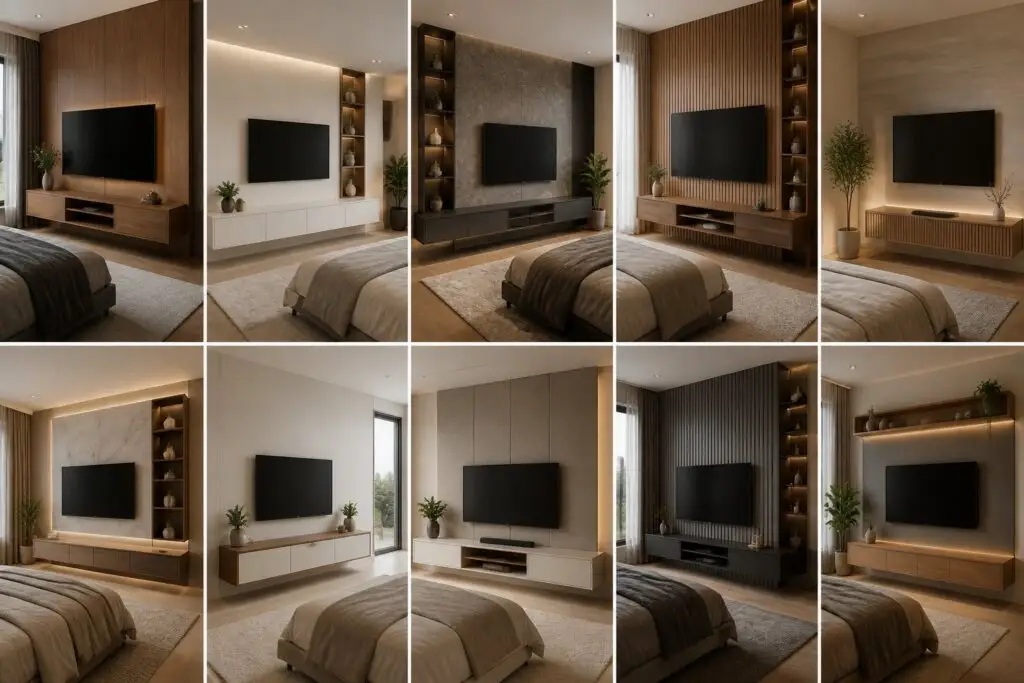
This article helps homeowners compare modern TV unit styles, storage options, materials, and placement choices for different bedroom sizes. It covers clean floating panels, built-in storage, warm wood finishes, compact corner units, and other practical designs.
1) Floating TV panel with concealed wiring
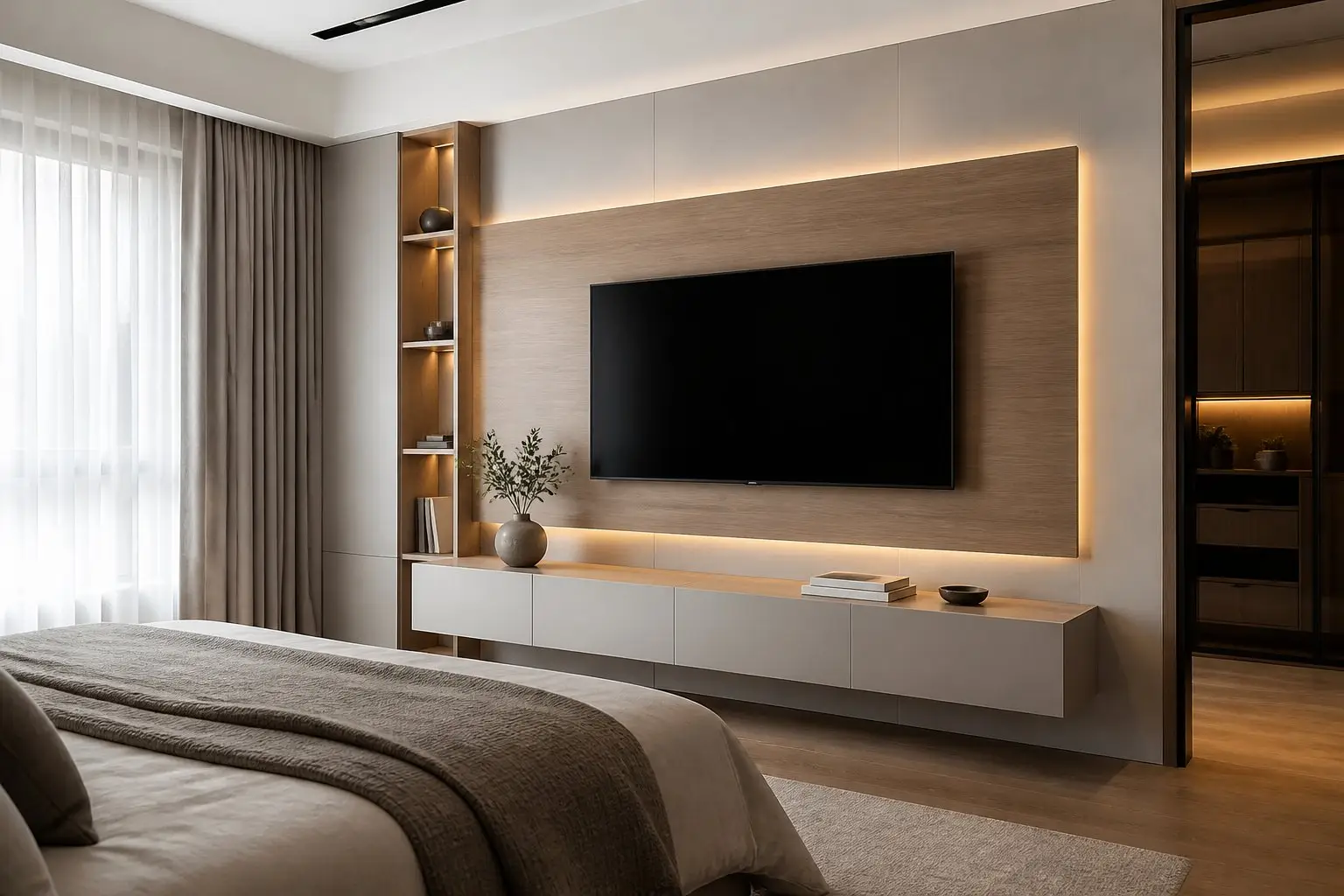
A floating TV panel mounts the screen on the wall and keeps the floor clear. Its internal cable channels guide wires behind the panel, creating a neat bedroom setup.
Designers often pair the panel with a slim floating console for small devices and accessories. A warm LED strip behind the panel can provide soft backlighting without adding visual clutter, as noted in these bedroom TV panel design ideas. The panel should support the TV’s weight and allow access to power points.
2) Wall-mounted wooden TV unit with drawers
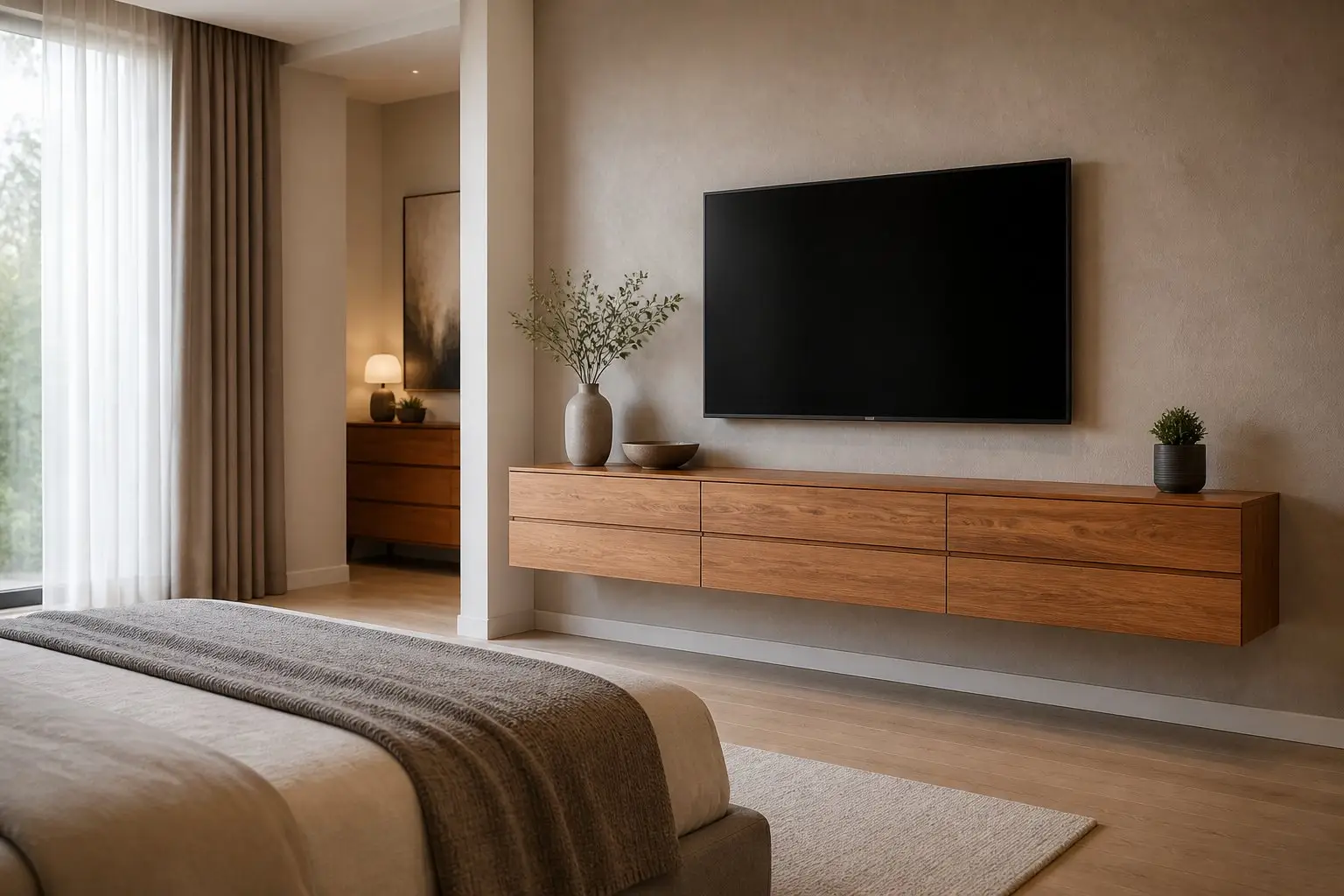
A wall-mounted wooden TV unit gives the bedroom a warm, clean appearance while keeping the floor open. Its raised design also makes cleaning easier and can suit both small and large rooms.
Drawers below the screen provide concealed storage for remotes, cables, and media devices. Designers often pair natural wood with white or neutral panels for a lighter, modern look, as shown in these bedroom TV cabinet designs.
The unit should include space for cable access and allow the screen to sit at a comfortable viewing height. Handles, drawer depth, and wall strength should match the room’s needs.
3) Full-height TV wall with integrated storage
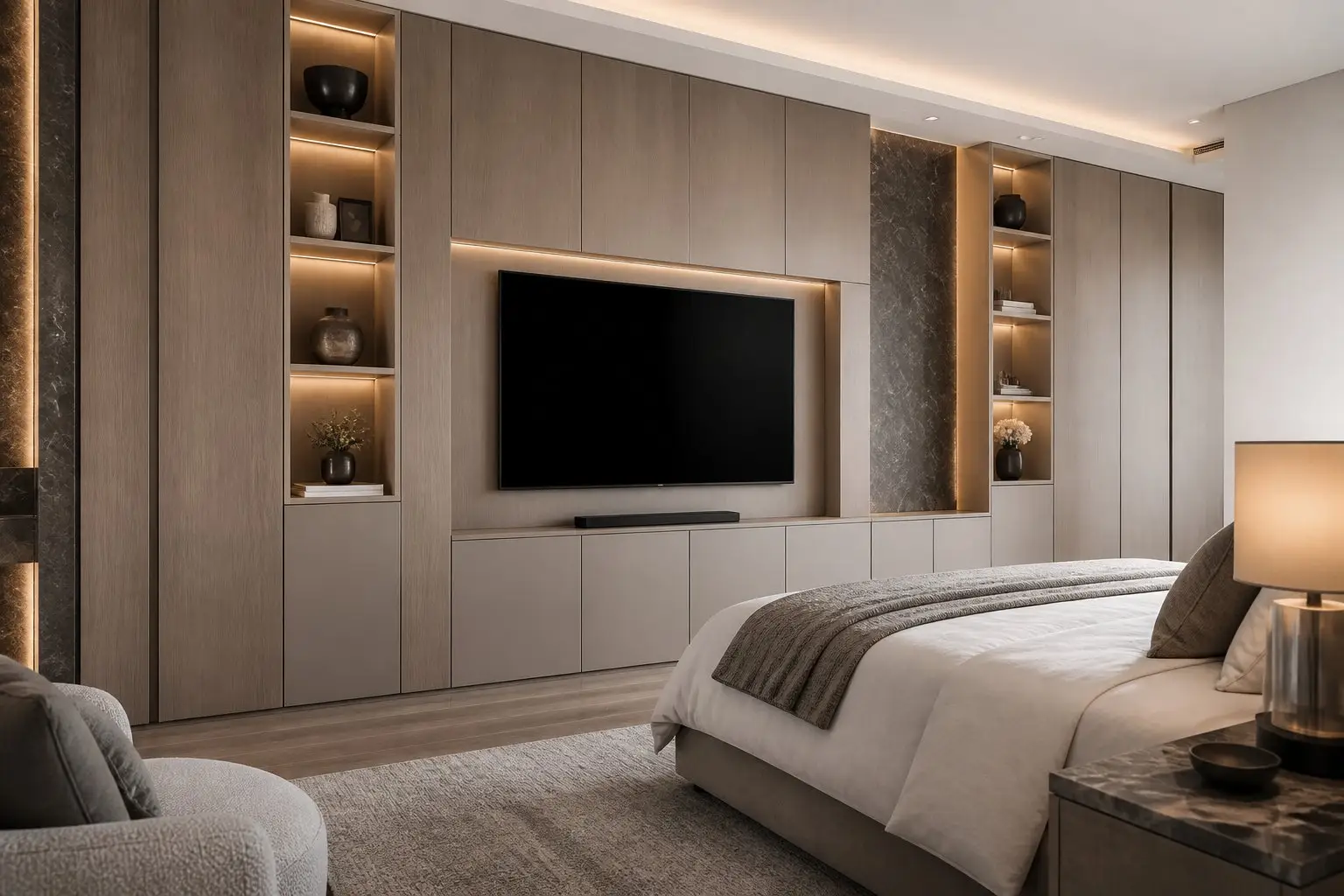
A full-height TV wall uses the entire vertical space to create a clean, built-in look. The television sits within a planned layout of cabinets, drawers, and open shelves.
Closed storage hides devices, cables, and personal items, while open shelves display books or decor. Designers can match the unit to the bedroom’s finishes with wood, laminate, paint, or textured panels.
This design works well in bedrooms that need more storage without adding several separate pieces of furniture. Built-in TV storage ideas can help guide the layout.
4) Minimalist fluted-panel TV unit
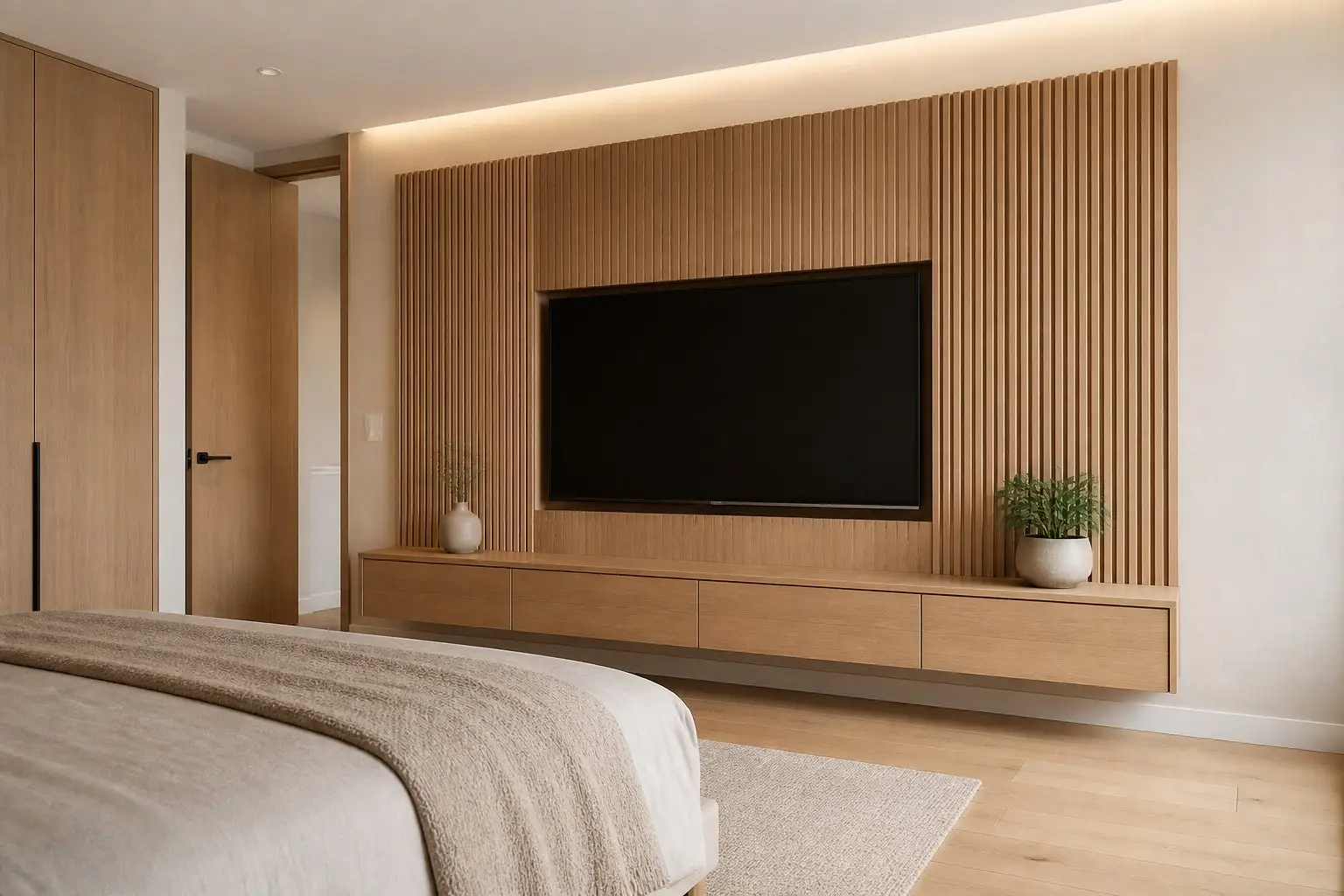
A minimalist fluted-panel TV unit adds texture without making the bedroom feel busy. Vertical grooves create visual depth while keeping the design clean and balanced.
A wall-mounted console can provide storage for devices, remotes, and small items. Concealed cable channels help maintain a neat appearance, while a warm wood finish suits neutral bedroom colors. Designers may pair the panel with soft LED lighting for gentle evening illumination, as shown in these fluted-panel TV unit designs.
5) Contemporary glass TV console
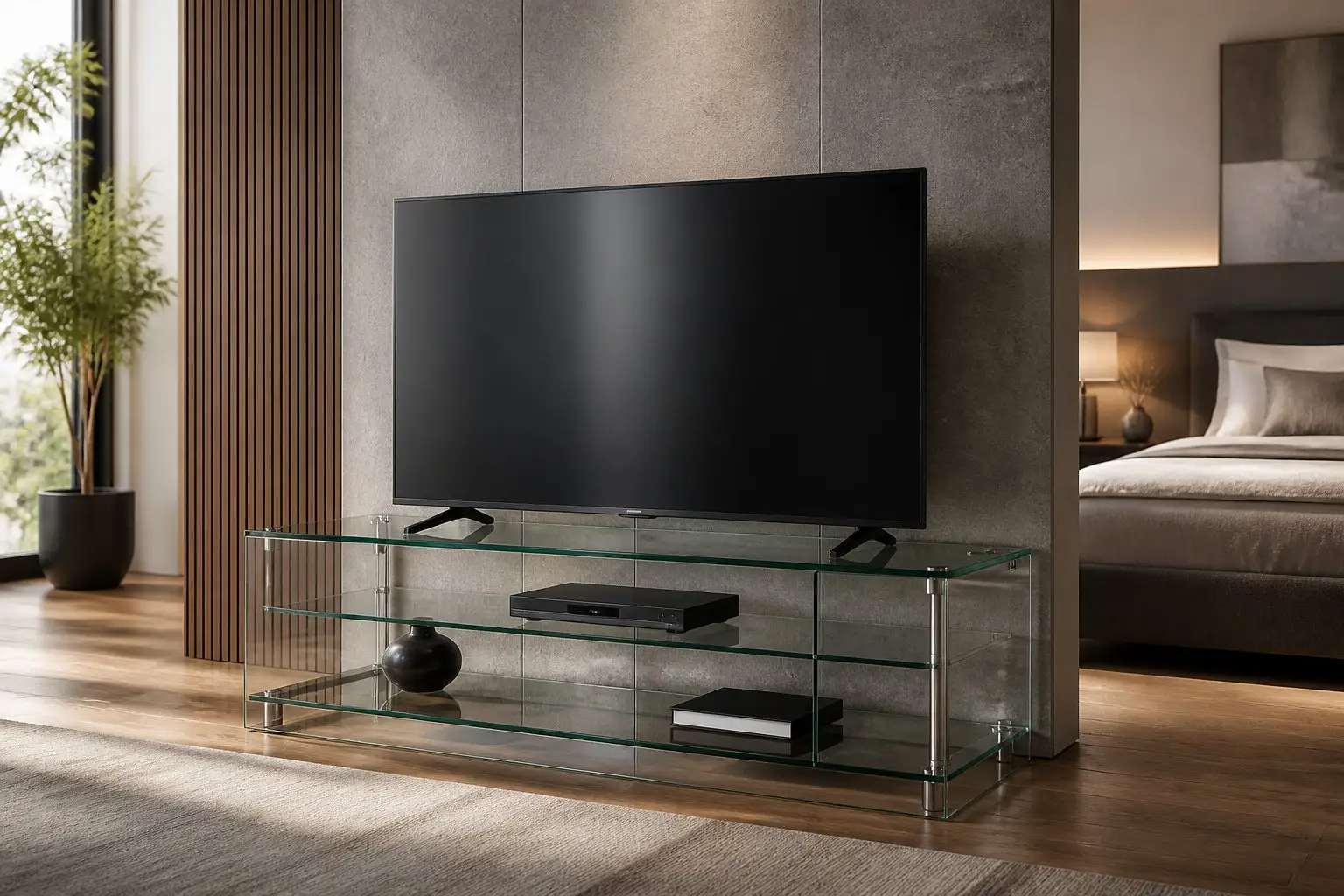
A contemporary glass TV console gives the bedroom a clean, open look. Clear or tinted tempered glass shelves can hold media devices, books, or small décor items without making the wall feel crowded.
Metal frames add structure and suit modern interiors, while darker glass creates a more refined appearance. Designers often use glass units in smaller bedrooms because their transparent surfaces can make the space feel less enclosed. Glass TV unit ideas also include clear, colored, and tinted finishes.
6) Built-in TV unit with open display niches
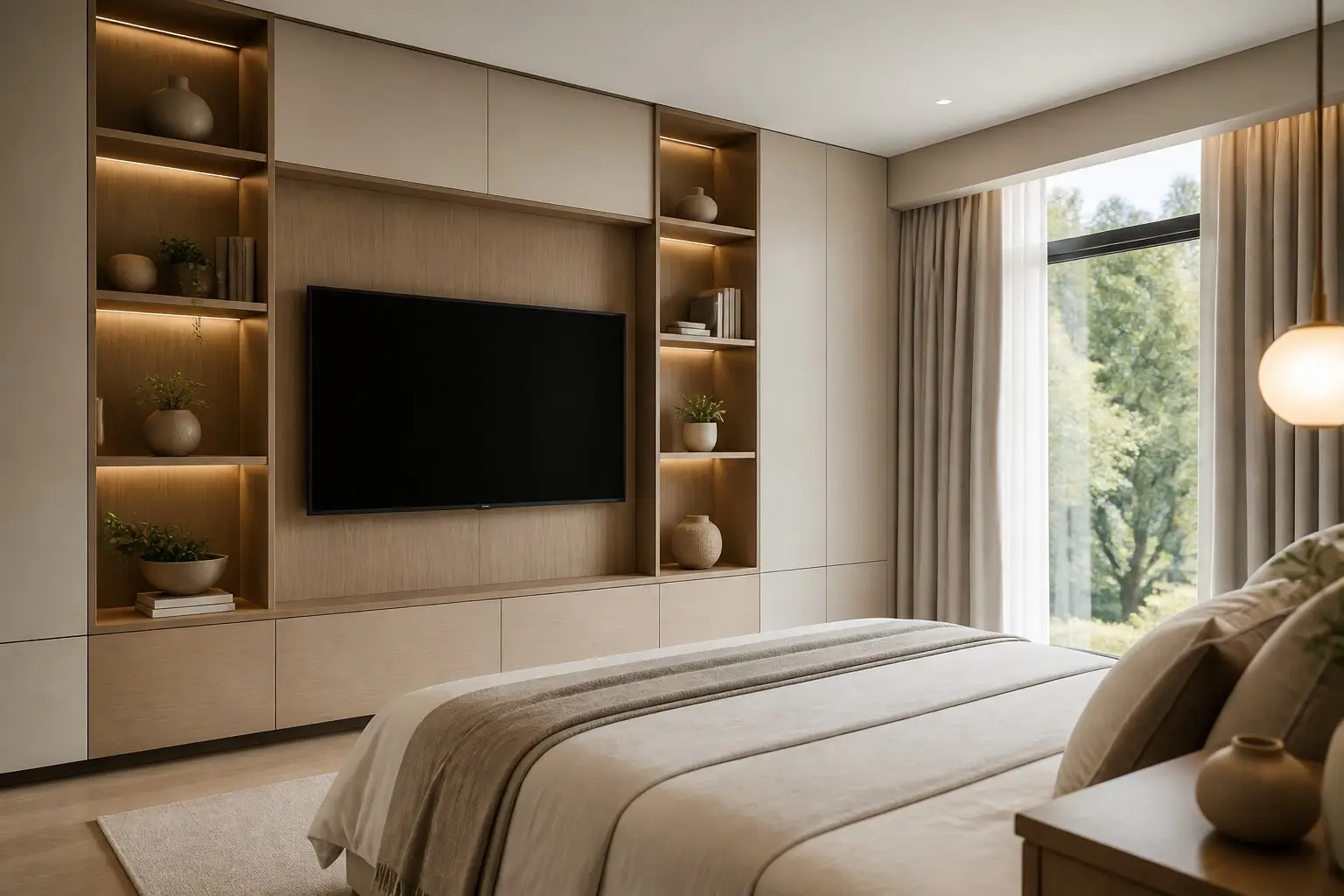
A built-in TV unit with open display niches creates a clean, fitted look around the screen. Designers often pair open shelving with closed cabinets to display books or decor while keeping cables and extra items hidden, as shown in these modern built-in TV wall unit designs.
The niches can use wood, painted panels, or contrasting back panels for visual depth. Adjustable shelves help the unit suit different items, while warm lighting can make the display area feel more welcoming without adding clutter.
7) Soft LED-lit floating TV cabinet
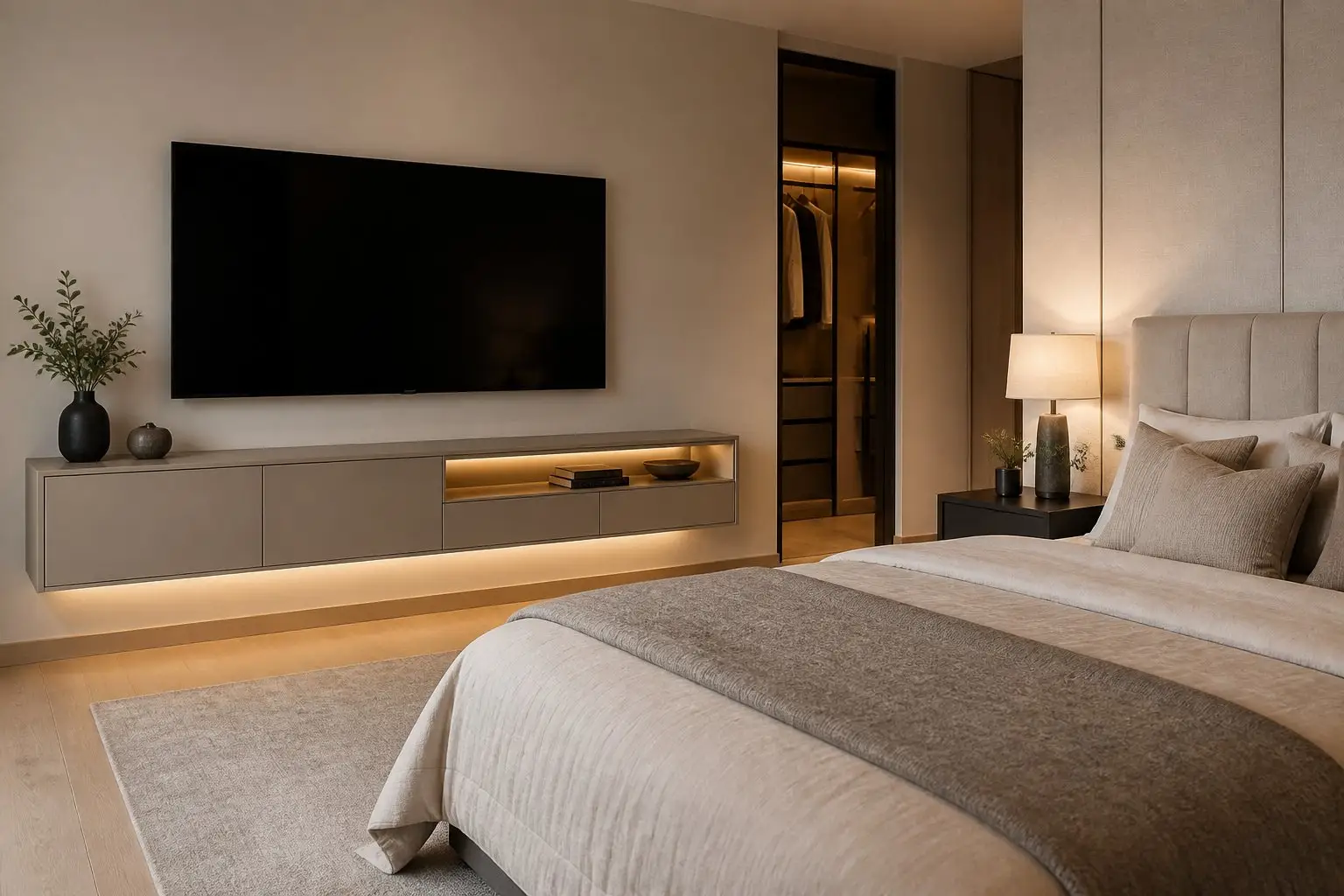
A floating TV cabinet keeps the floor clear and gives the bedroom a neat, modern appearance. Wall-mounted storage can hold media devices, remotes, and small items while reducing visible clutter.
Soft LED strips beneath or behind the cabinet add gentle lighting without overpowering the room. They can provide useful evening light and create a calm setting for viewing.
A matte wood, white, or neutral finish works well with most bedroom styles. Install the cabinet at a comfortable viewing height, secure it to suitable wall supports, and leave space for proper cable ventilation. Floating TV panels commonly combine concealed wiring, storage, and integrated lighting.
8) Compact corner TV unit for small bedrooms
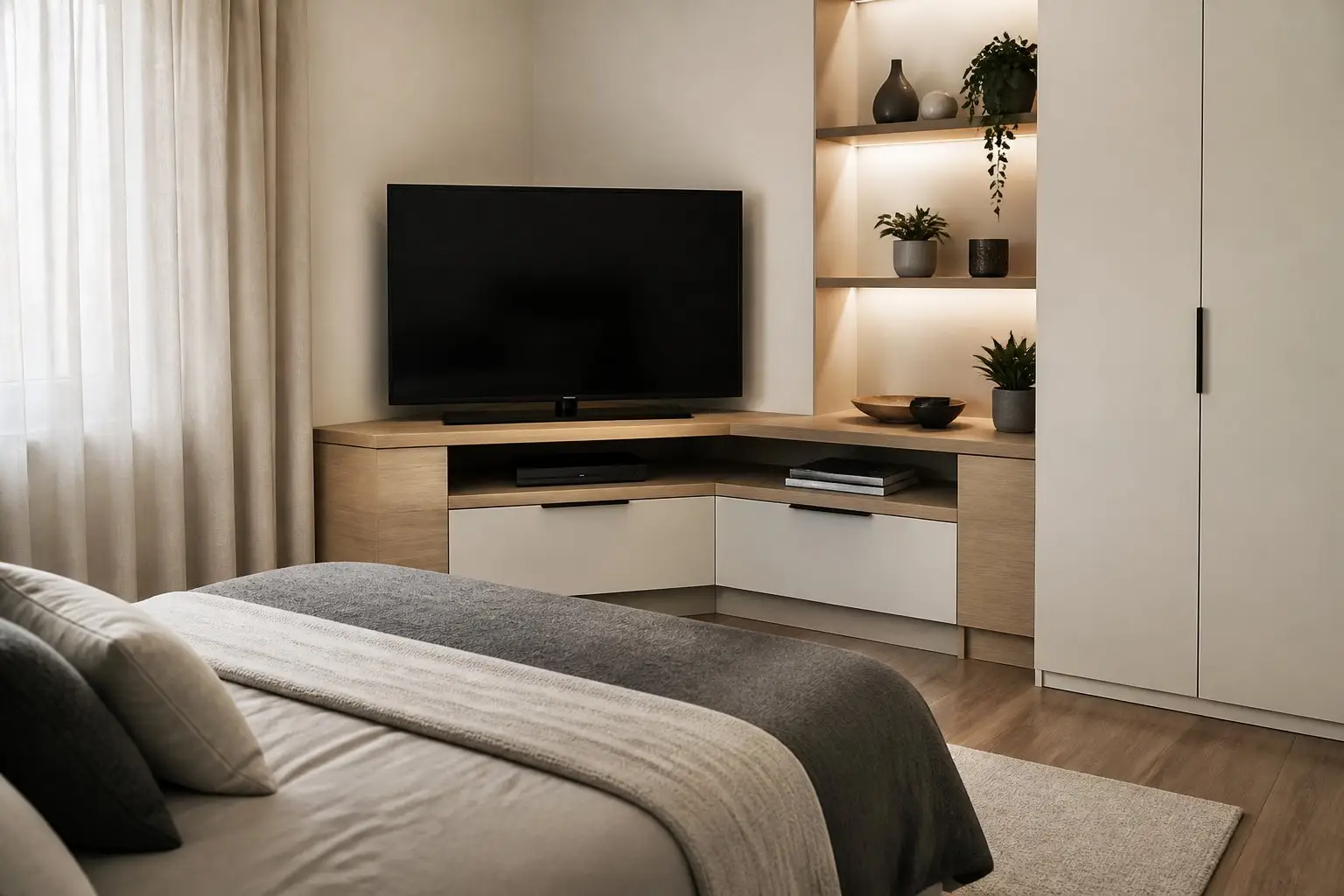
A compact corner TV unit uses an often-unused area, making it suitable for small bedrooms or rooms with unusual layouts. Its angled design can improve viewing without taking up the main wall.
A wall-mounted screen with a narrow corner cabinet keeps the floor clear. Open shelves can hold a set-top box, while a closed compartment hides cables and smaller items.
The unit should match the room’s width and leave enough space for doors, windows, and movement. A light finish or simple wood tone can keep the corner looking neat. Corner TV unit ideas offer additional layout options.
9) Marble-finish TV panel with closed cabinets
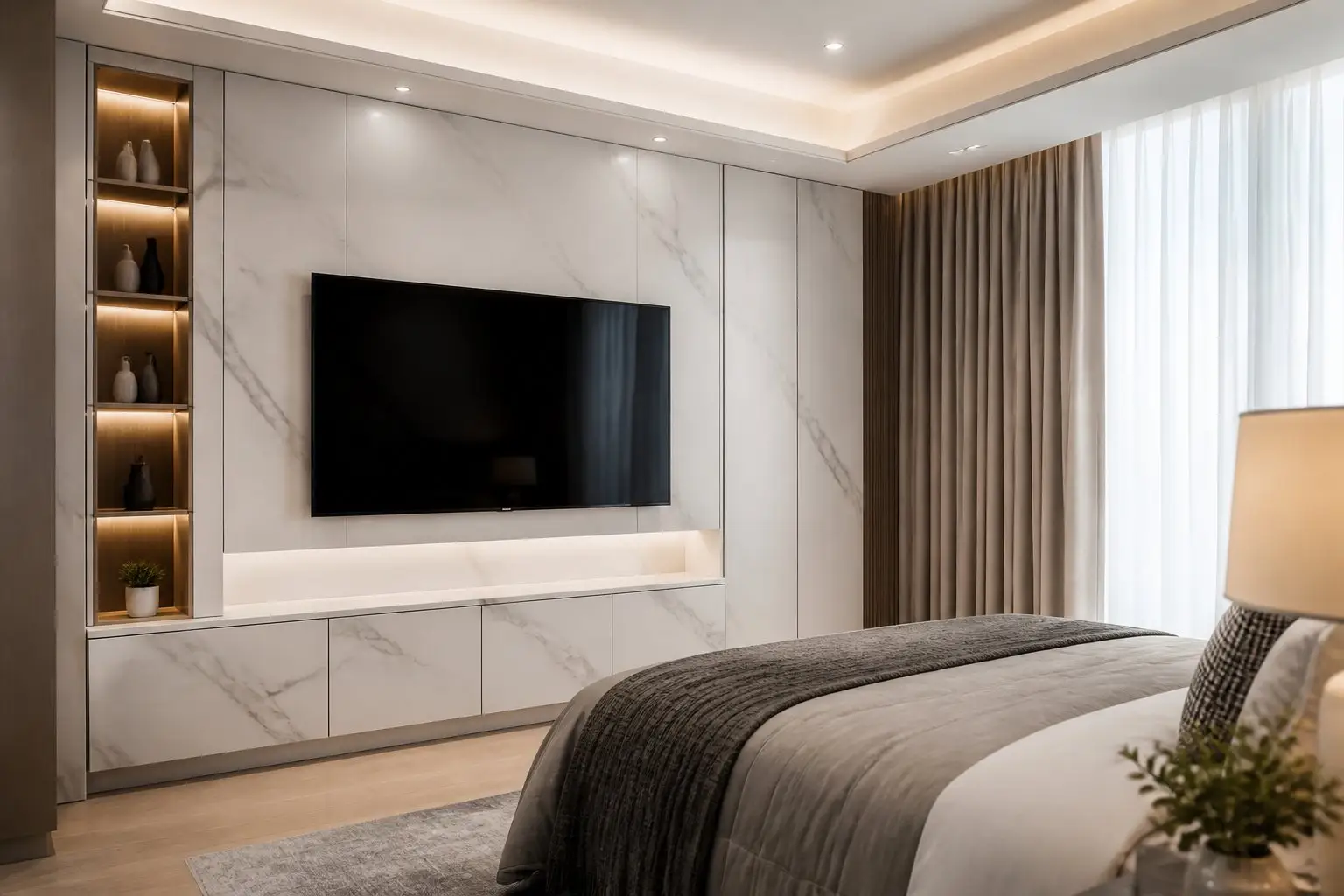
A marble-finish TV panel gives the bedroom a clean, modern focal point. Its soft patterns add visual interest without making the wall feel busy.
Closed cabinets below the panel keep remotes, media devices, and other items out of sight. Handle-free doors create a smooth appearance, while an engineered-wood base with laminate or veneer can offer a practical alternative to real stone.
Warm lighting beneath the panel can soften the marble effect. The design works best when the panel matches the room’s flooring, bed frame, or other neutral finishes.
10) Warm oak TV unit with sliding doors
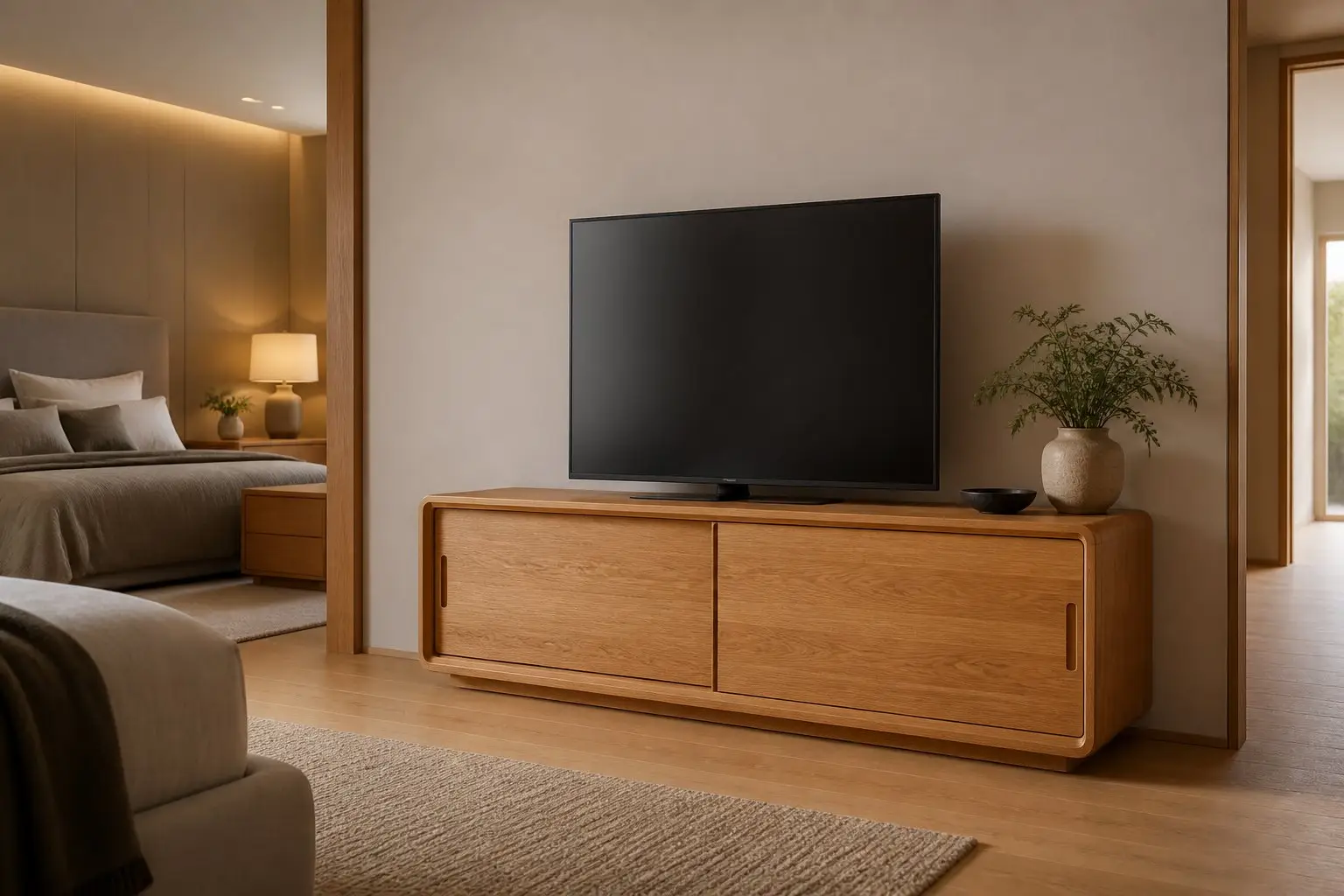
A warm oak TV unit adds natural color and texture to a modern bedroom. Its simple form can soften sharp lines while keeping the room practical and uncluttered.
Sliding doors hide media devices, cables, and other items when they are not in use. This design works well in smaller rooms because the doors do not swing into walkways. For more inspiration, explore these oak TV unit ideas.
Planning Size, Placement, And Viewing Comfort
A well-planned TV unit keeps the wall balanced, protects clear walking space, and supports comfortable viewing from the bed. The screen size, mounting height, viewing distance, and glare control should work together.
Choosing the Right TV Size for the Wall
The TV should suit both the wall width and the viewing distance. A 32–43-inch screen often fits a smaller bedroom, while a 43–50-inch screen works well in many standard bedrooms. A larger primary bedroom may support a 50–65-inch TV when the bed sits far enough away. This bedroom TV size guide provides more size considerations.
The TV should not fill the entire wall. A unit that extends slightly beyond the screen can create balance, while a panel that is too wide may make the wall look heavy. The designer should measure the wall, bed position, nearby furniture, and available cable space before choosing the unit.
A slim floating cabinet suits small rooms because it leaves more visible floor space. A full-width panel with drawers works better when the bedroom needs extra storage.
Optimizing Viewing Height and Distance
The screen should sit at a comfortable height for viewing from the bed. The center of the TV usually works best near the viewer’s eye level when they recline, rather than at standard living-room height. A unit mounted too high can cause neck strain, especially during long viewing sessions.
The bed should face the TV directly when possible. The designer should also leave enough distance between the screen and pillows so the image does not feel too large. Bedroom TV placement advice covers viewing distance, mounting height, and glare control.
Windows and bright lamps should not face the screen. Curtains, adjustable blinds, or a movable TV mount can reduce reflections. The unit should also keep doors, wardrobes, and walking paths clear.
Materials, Storage, And Installation Considerations
A well-planned TV unit should match the bedroom’s finishes, hide cables safely, and provide storage without making the room feel crowded. The wall structure, viewing height, ventilation, and access to power outlets also affect the final design.
Coordinating Finishes With Bedroom Decor
The TV unit should repeat one or two finishes already used in the bedroom. A walnut panel can match a wooden bed frame, while matte white or beige cabinetry can support a light, modern color scheme. Designers can combine wood with fluted panels, laminate, glass, or painted MDF to add texture without creating visual clutter.
The unit’s finish should also suit the room’s lighting. Dark wood and black panels can look refined in a bright bedroom but may make a small, poorly lit room feel heavier. Light oak, cream, or soft gray finishes usually reflect more light and create a calmer appearance.
A finish plan can help coordinate the design:
- Match the cabinet tone with nearby furniture.
- Use matte surfaces to reduce glare from the screen.
- Limit bold textures to one main panel.
- Choose durable, easy-to-clean laminates for frequent use.
Managing Cables and Power Access
Cable planning should happen before the wall panel or cabinet gets installed. The installer should identify the TV’s power point, streaming devices, speakers, and internet connection, then provide concealed channels or conduits between them. A removable panel or access opening makes future repairs easier.
The TV should not block a power outlet, and cables should not hang behind the screen where they remain visible. Power and signal cables may need separate routes to reduce interference, subject to local electrical rules. A qualified electrician should handle new outlets, concealed wiring, and any changes inside the wall.
The unit also needs airflow around devices such as media boxes, game consoles, and routers. Closed cabinets should include ventilation gaps, while open shelves should leave enough space for plugs and cable bends.
Selecting Open, Closed, or Floating Storage
Open shelves provide quick access to remotes, books, speakers, and decorative items. They work well in bedrooms that need a light, airy design, but exposed items require regular tidying and can collect dust.
Closed cabinets hide electronics, chargers, and personal items. They create a cleaner appearance, especially when the unit sits opposite the bed. Doors should allow remote signals to reach the devices, or the cabinet should include a signal-friendly panel and adequate ventilation.
Floating units leave floor space visible and make cleaning easier. They require a strong wall and secure brackets, particularly when the cabinet holds heavy equipment. A wall-mounted unit should also sit at a comfortable viewing height, with the screen centered near the viewer’s eye level when seated or reclining. Customized designs can add hidden storage and cable management for a precise fit, as described in modern bedroom TV unit planning.
Frequently Asked Questions
Modern bedroom TV units now combine clean lines, concealed wiring, practical storage, and materials such as wood, fluted panels, and glass. The best choice depends on room size, viewing height, storage needs, lighting, and the desired level of visual detail.
What are the latest TV unit design trends for modern bedrooms?
Floating TV panels with concealed wiring create a clean wall and leave the floor visible. Wall-mounted wooden units with drawers add warmth while keeping remotes, cables, and small items out of sight.
Full-height TV walls provide space for cabinets, shelves, and display areas from floor to ceiling. Minimalist fluted panels add texture without requiring bold colors, while contemporary glass consoles create a lighter, more open appearance.
Which TV unit designs work best in small bedrooms?
A floating TV panel usually works well because it uses wall space and keeps the floor clear. A slim wall-mounted cabinet with drawers can provide storage without making the room feel crowded.
For very tight layouts, the TV unit should match the wall width and avoid deep shelves. A foldaway or compact console may also help when the room needs flexible floor space.
How can I style a TV unit for a modern and elegant look?
The TV unit should use a limited material and color palette, such as natural wood with warm white panels. Open shelves should hold only a few items, including one plant, framed print, or ceramic object.
Concealed wiring helps preserve a tidy appearance. Soft lighting behind the panel can add depth, while matte finishes often create a more refined look than highly reflective surfaces.
Are wall-mounted TV units better than freestanding cabinets for bedrooms?
Wall-mounted units suit bedrooms that need more visible floor space and a lighter appearance. They also make cleaning easier because the cabinet does not sit directly on the floor.
Freestanding cabinets offer simpler installation and can provide more enclosed storage. They may suit rooms where the wall cannot support a mounted unit or where the layout may change later.
What storage features should a modern bedroom TV unit include?
Useful features include soft-close drawers, closed cabinets, adjustable shelves, and cable openings behind the TV. Ventilated compartments can protect media equipment from heat buildup.
A full-height TV wall can combine low drawers with tall cabinets or open niches. The storage should match the room’s needs rather than fill every available section with shelves.
How can mirrors and lighting be incorporated into a bedroom TV unit design?
A mirror can sit beside the TV panel, inside an open niche, or across a section of the wall. It can reflect light and make a compact bedroom feel more open, but it should not create glare on the screen.
Warm LED strips can be placed behind the TV panel, under cabinets, or inside display niches. Lighting should include a dimmer or separate switch so it does not disturb viewing or sleep.