 Everyday


You can create a calm modern bedroom by balancing your chosen green with natural wood, warm textiles, simple lighting, and carefully selected accents. Explore twelve design approaches, along with practical guidance for planning your color palette and caring for painted walls.
1) Soft sage walls with crisp white bedding and oak accents
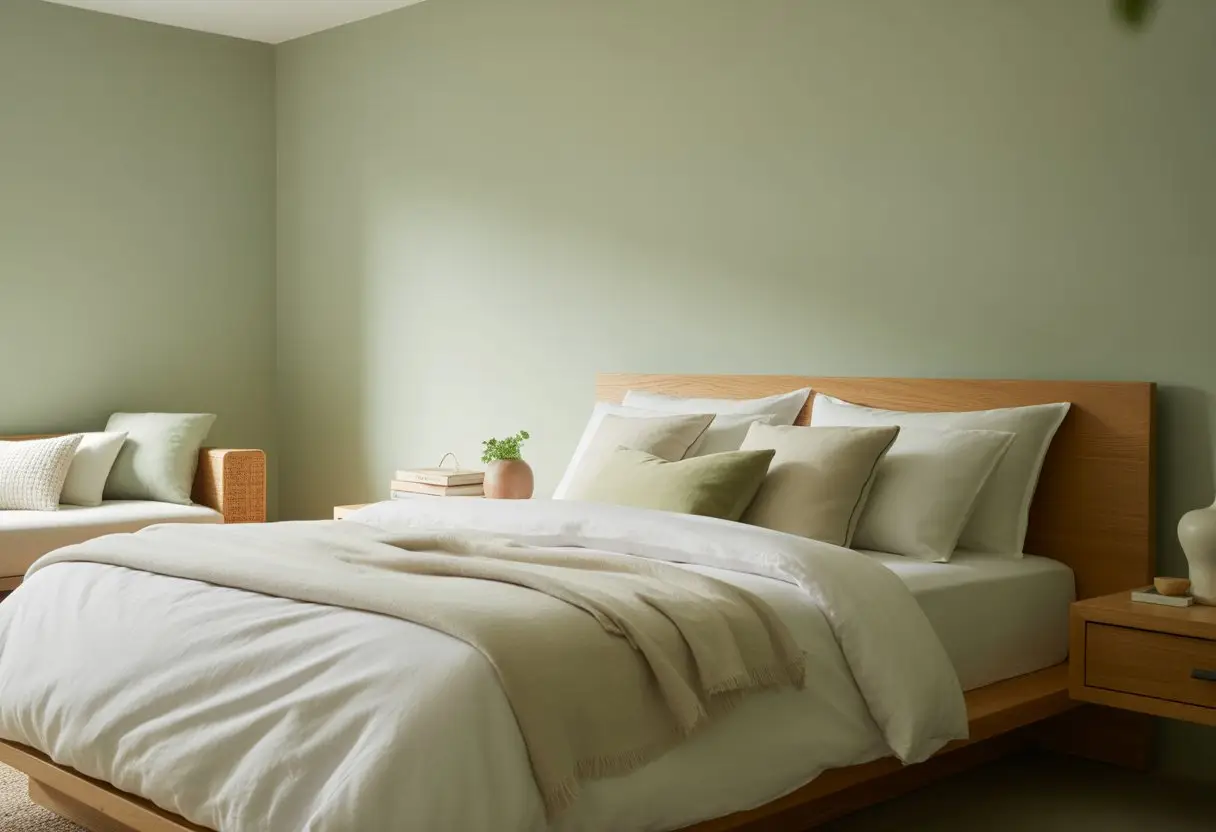
Paint your bedroom walls a soft sage green to create a calm, nature-inspired backdrop. Keep the bedding crisp white so the room stays bright and balanced.
Add oak furniture, such as a bed frame, nightstands, or a bench, to bring gentle warmth to the cool green and white palette. Choose simple, clean-lined pieces to support a modern look without making the room feel crowded.
Layer in woven baskets, linen curtains, or a textured rug for subtle depth. Sage and white bedroom ideas also show how light wood and natural textures can warm this color pairing.
2) Muted eucalyptus walls paired with warm beige textiles
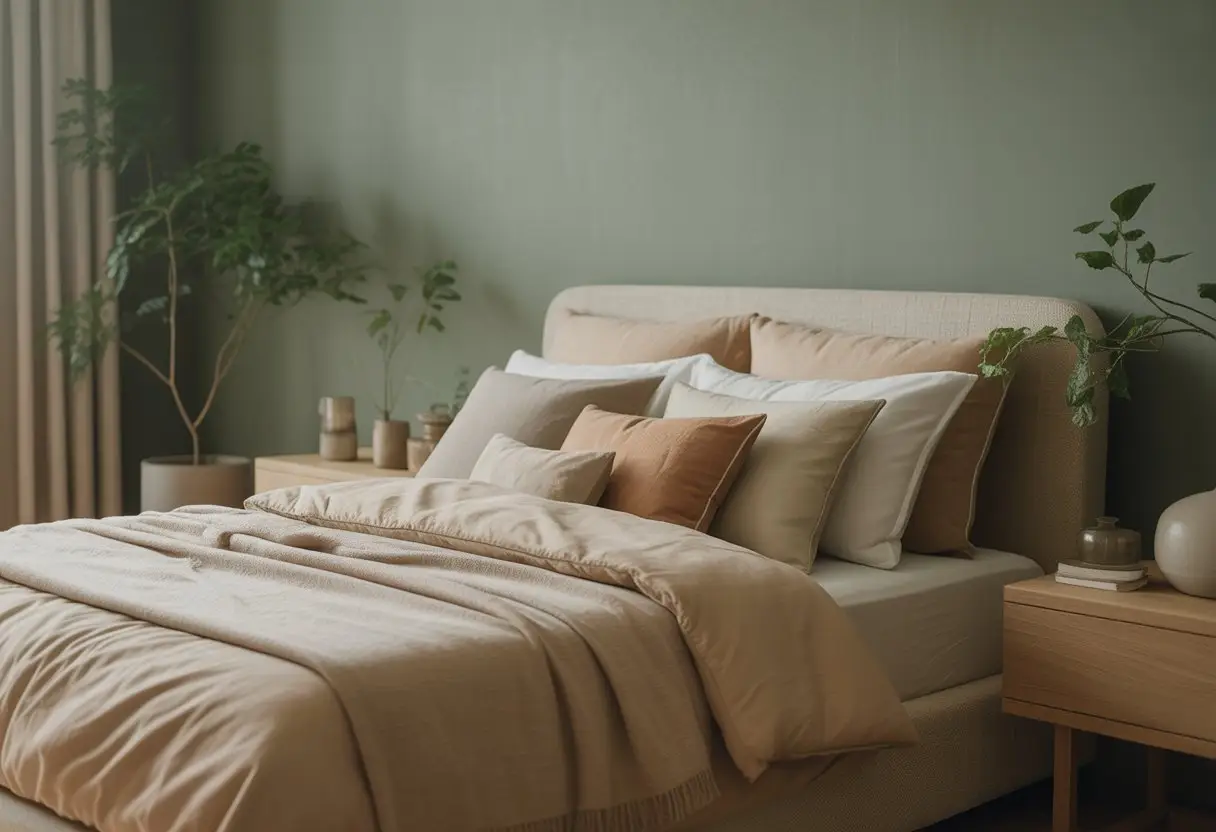
Choose muted eucalyptus paint for a soft green backdrop that feels calm without looking dull. Its gray undertone works well in bedrooms with natural light and simple, modern furniture.
Add warm beige linen bedding, curtains, or a woven bench to balance the cooler wall color. Light wood, jute, and soft knit textures can add depth while keeping the room relaxed and uncluttered.
For more color ideas, explore these eucalyptus bedroom palettes and pair the walls with cream, sand, or oatmeal tones.
3) Deep forest-green accent wall behind a low-profile bed
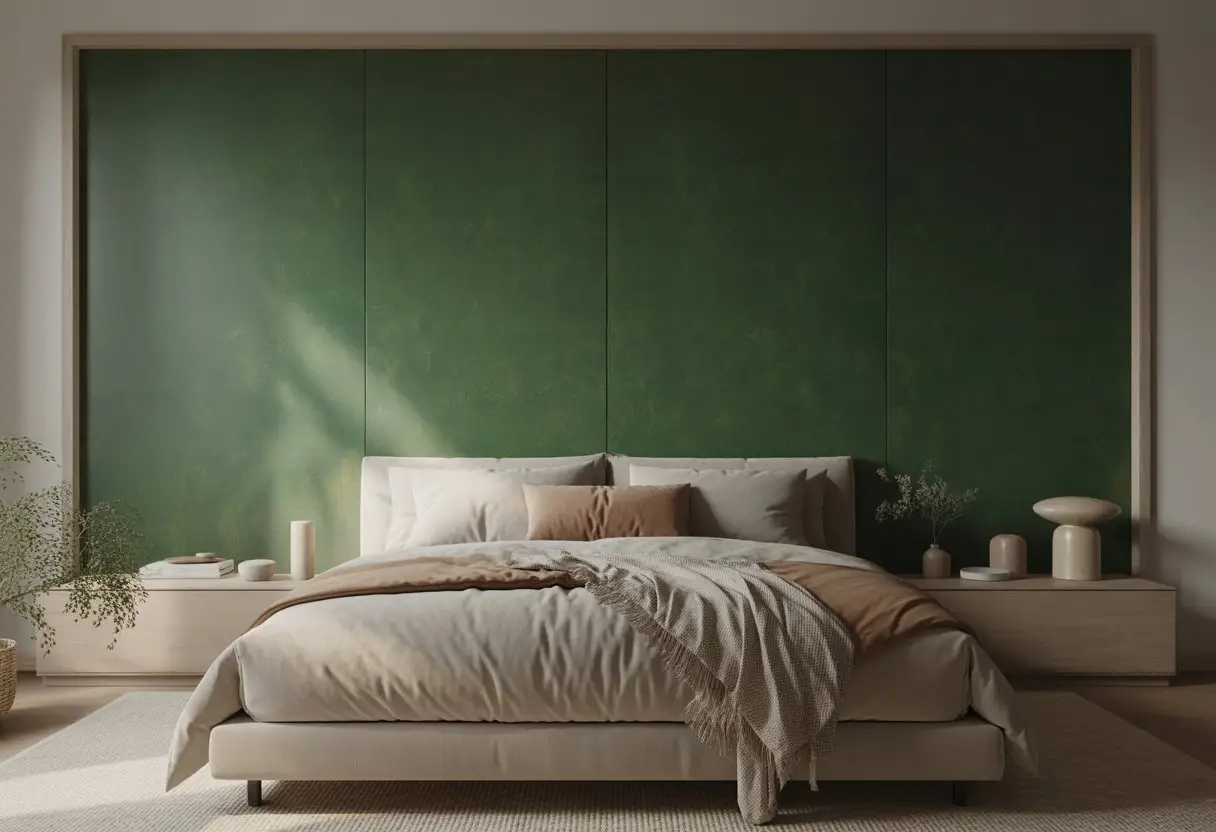
Paint the wall behind your low-profile bed in a deep forest green to create a grounded, modern setting. The low frame keeps the room open, while the dark color adds depth without taking up physical space.
Pair the wall with crisp white or warm beige bedding, natural wood, and woven textures. This combination balances the rich paint and supports a calm, uncluttered feel, as shown in these forest-green bedroom ideas.
Test paint samples in morning and evening light before choosing your shade. Muted forest greens often work well in rooms with natural wood and simple furniture.
4) Olive green walls with walnut furniture and linen bedding
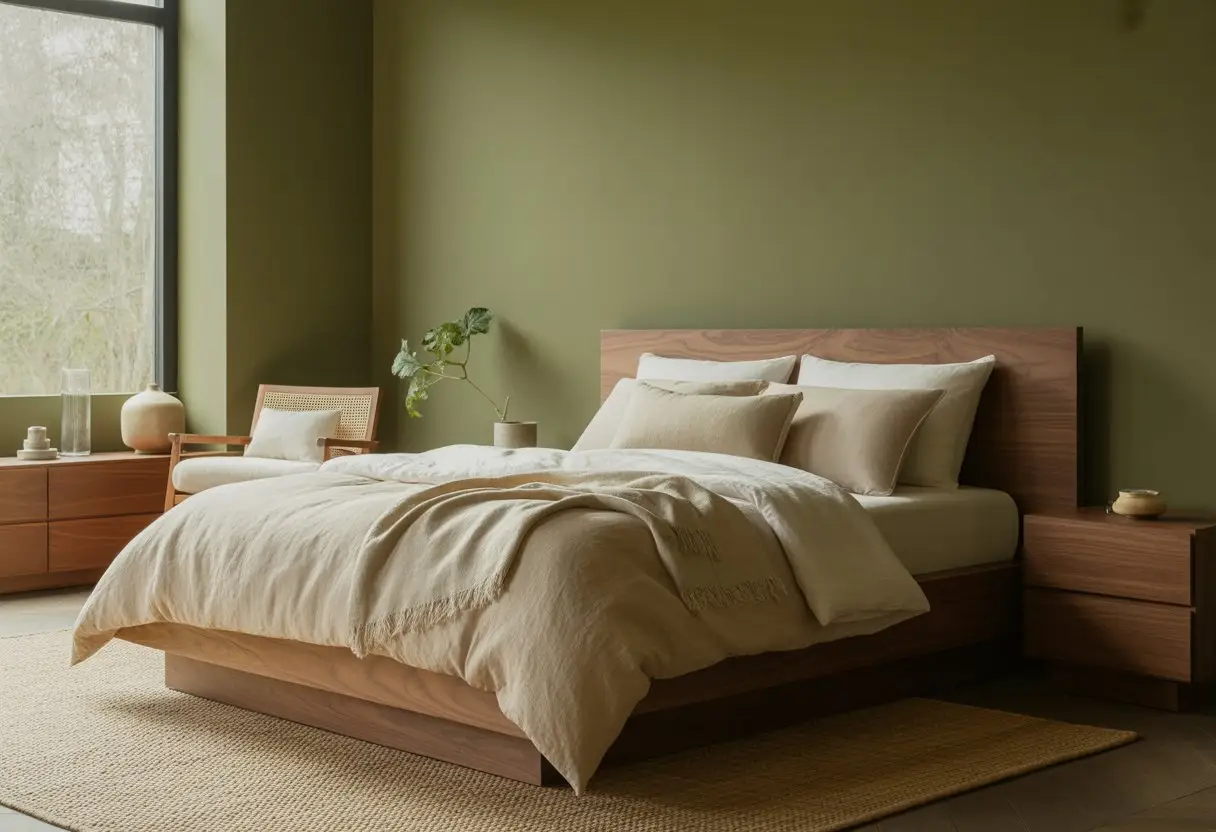
Choose olive green walls to give your bedroom a warm, natural backdrop. The color works well with walnut furniture, whose rich wood tones add contrast without making the room feel harsh.
Use cream, ivory, or natural linen bedding to soften the deeper wall color. Add a charcoal throw, woven rug, or matte black lamp for texture and balance, as suggested in these olive green wall bedroom ideas.
Keep the furniture simple, with clean lines and limited decoration. This helps your bedroom feel calm while preserving a modern look.
5) Pale mint walls with light wood and woven textures
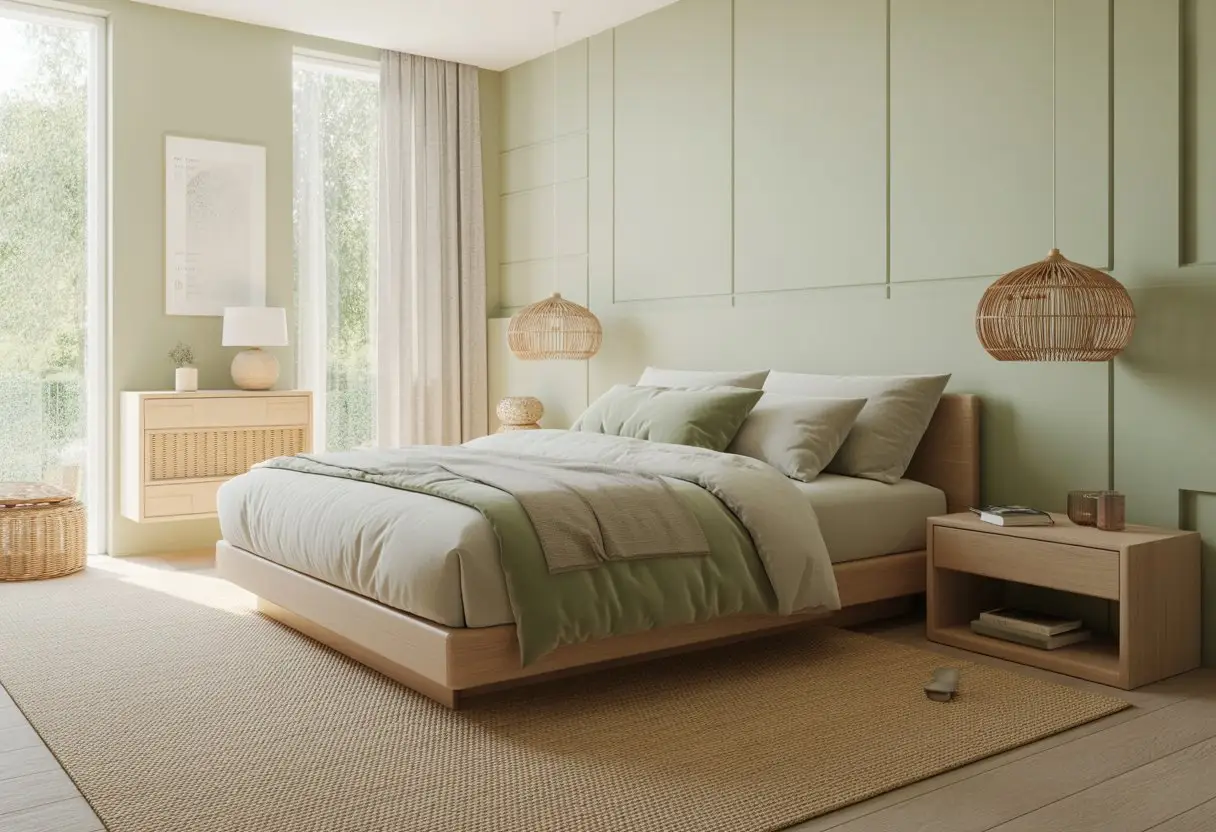
Choose pale mint paint to give your bedroom a soft, airy base. Light wood furniture adds warmth without making the room feel heavy.
Layer in woven materials through rattan baskets, seagrass shades, or a textured bench. Pair these elements with white cotton bedding and sheer curtains to keep the space bright, as shown in these pastel green bedroom ideas.
Test paint samples in both daylight and evening light before covering the walls. Natural fibers and simple artwork can add texture while keeping the design calm.
6) Emerald green feature wall balanced by cream upholstery
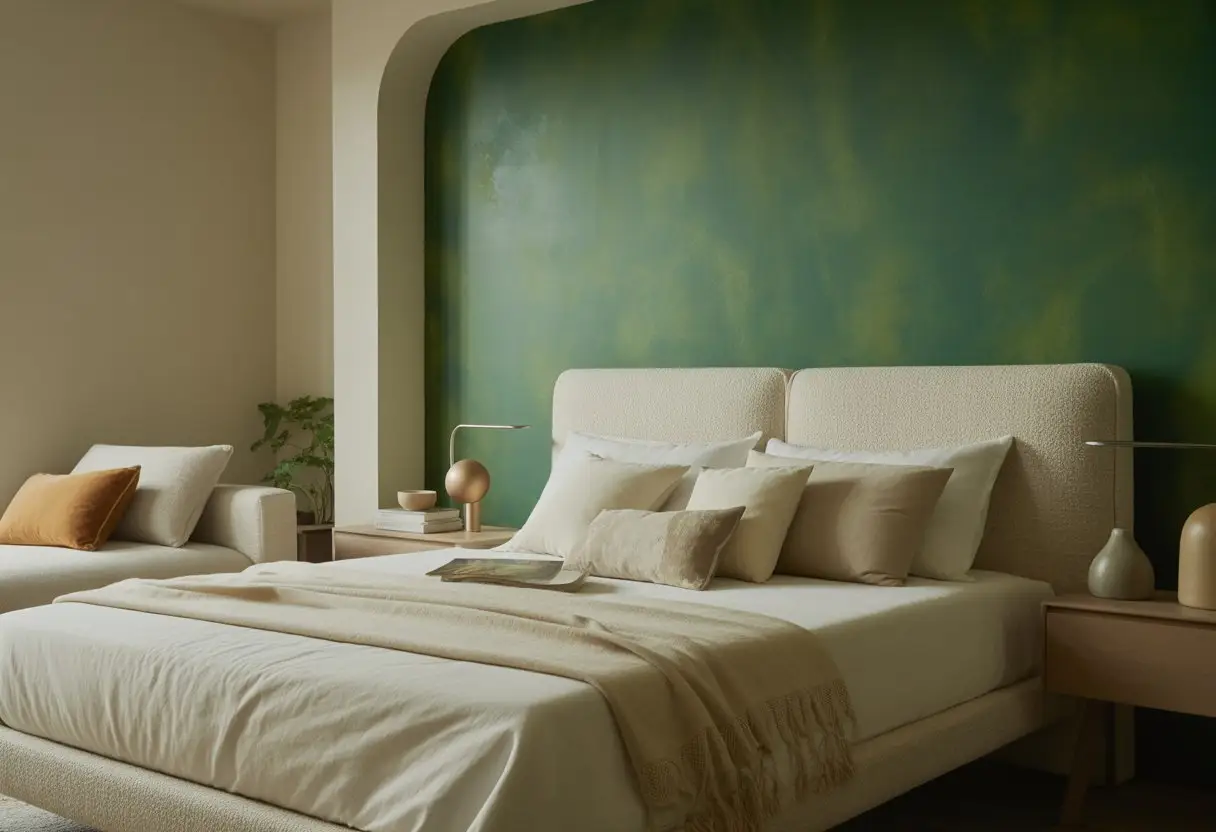
Paint the wall behind your bed emerald green to create a rich focal point. Choose a matte or low-sheen finish to keep the color calm and prevent glare.
Pair the wall with a cream upholstered headboard, bench, or armchair. The light fabric softens the deep green and adds comfort without competing for attention.
Use warm wood, brass, or black accents in small amounts. Keep bedding simple with cream, white, or beige layers so your bedroom feels balanced and restful. Explore more emerald green bedroom ideas for additional color and finish options.
7) Sage green paneling with brass sconces and neutral bedding
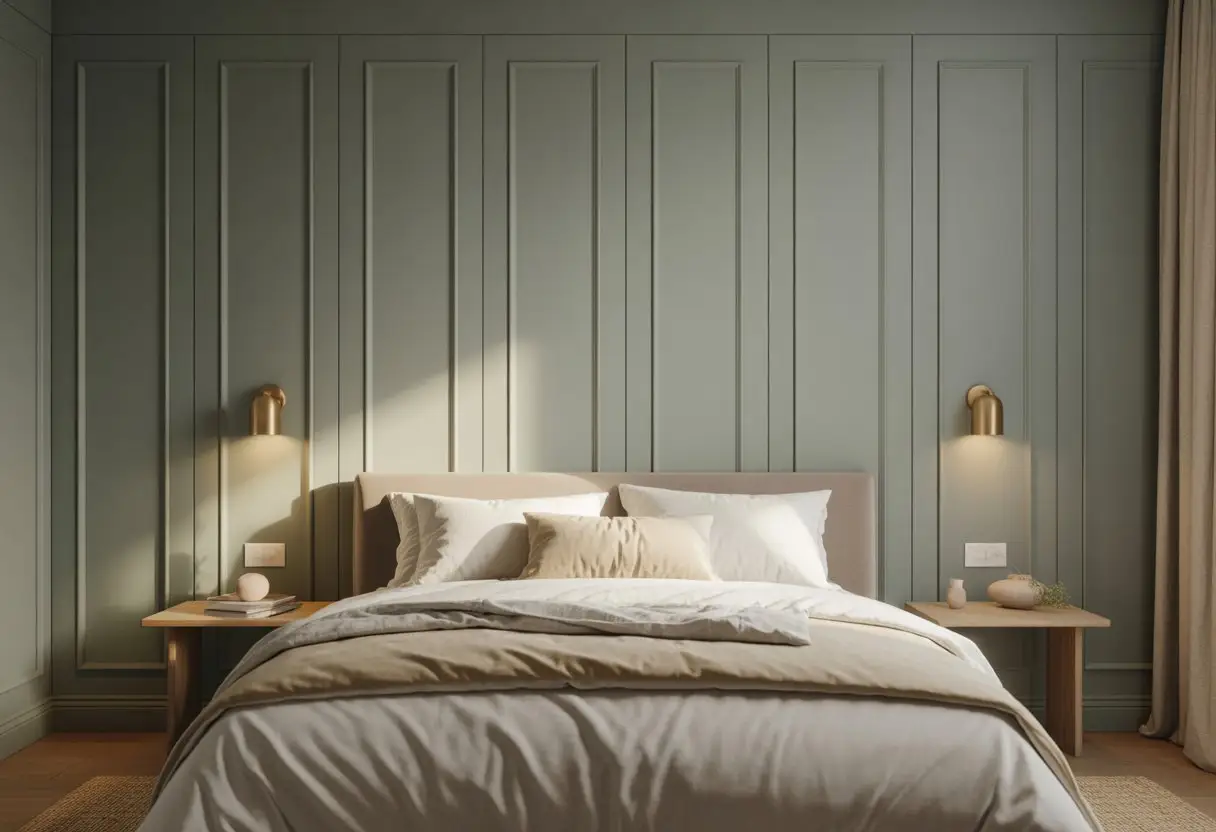
Use sage green wall paneling to add structure and gentle color without making the room feel busy. The muted shade pairs well with warm wood, cream, beige, and soft white bedding.
Mount brass sconces beside the bed for focused reading light and a refined contrast against the green wall. Choose simple shapes to keep the design modern.
Layer linen or cotton bedding in neutral tones, then add texture with a woven throw or a small accent cushion. For more ideas, explore these sage green paneling designs.
8) Green limewash walls with natural oak and layered cotton fabrics
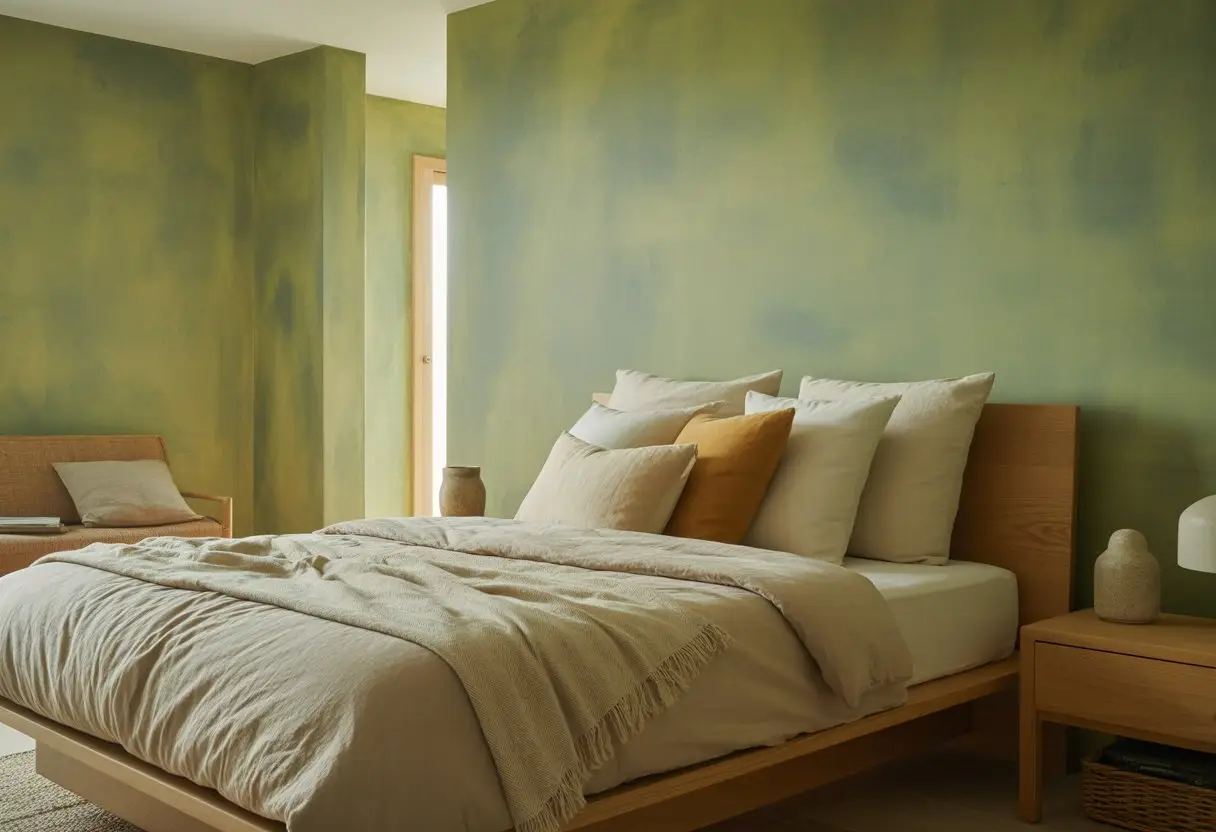
Choose a soft sage or moss green limewash finish to add gentle texture without making the room feel busy. Its uneven, matte surface works well with natural oak furniture and simple, clean shapes.
Layer cotton bedding in white, cream, and muted green for comfort and contrast. Add a woven rug, linen curtains, or a cotton throw to build warmth while keeping the room light.
For a calm Scandinavian or Japandi look, use simple lighting, limited decoration, and open space. See these limewash bedroom ideas for related pairings of green walls, oak, and natural fabrics.
9) Two-tone green walls combining pale sage and deep olive
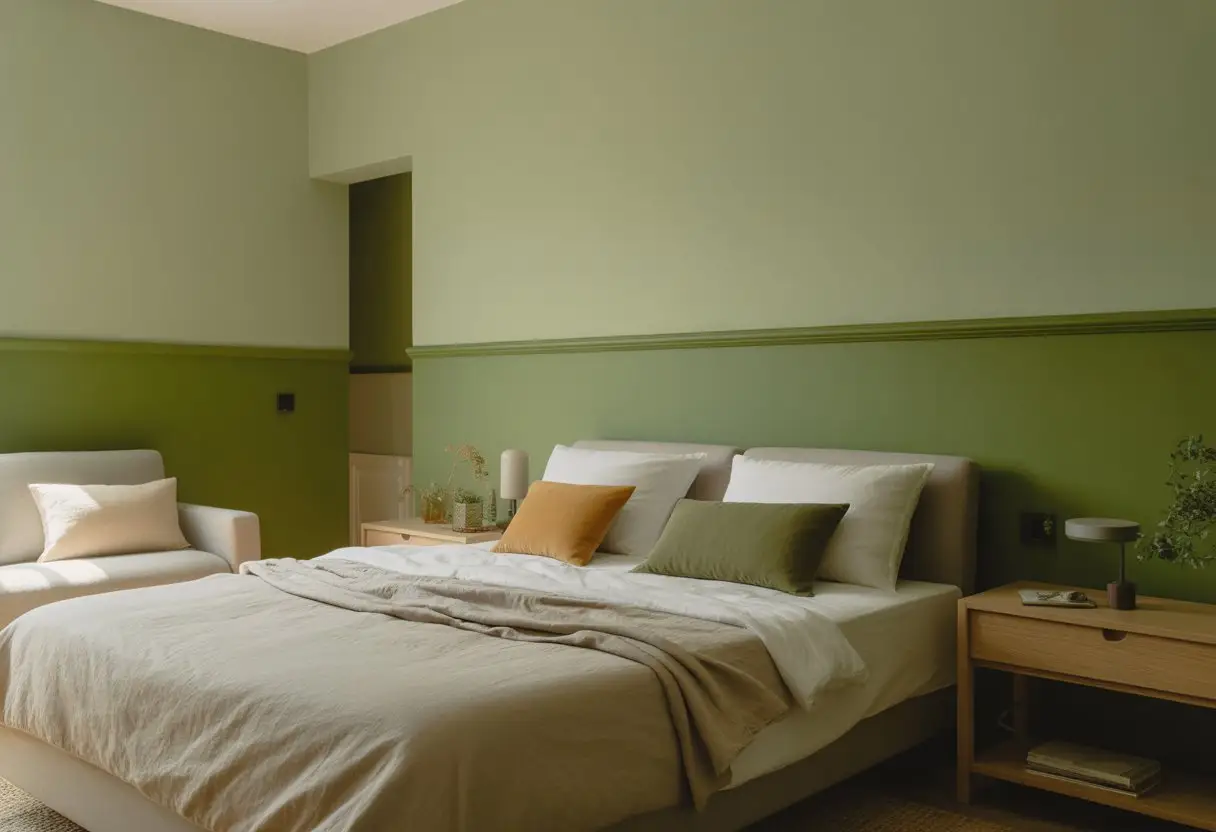
Use pale sage on the upper wall to keep your bedroom feeling light and open. Paint deep olive below a chair rail or along the lower half to add contrast and visual depth.
Pair the two shades with cream bedding, natural wood, and woven textures. Keep the trim simple in white or warm off-white so the wall colors remain the main feature.
For a softer transition, place a narrow wood rail between the colors. You can also use olive behind the bed and sage on the remaining walls for a balanced accent-wall design. See more two-tone sage wall ideas.
10) Botanical green walls with minimalist black lighting
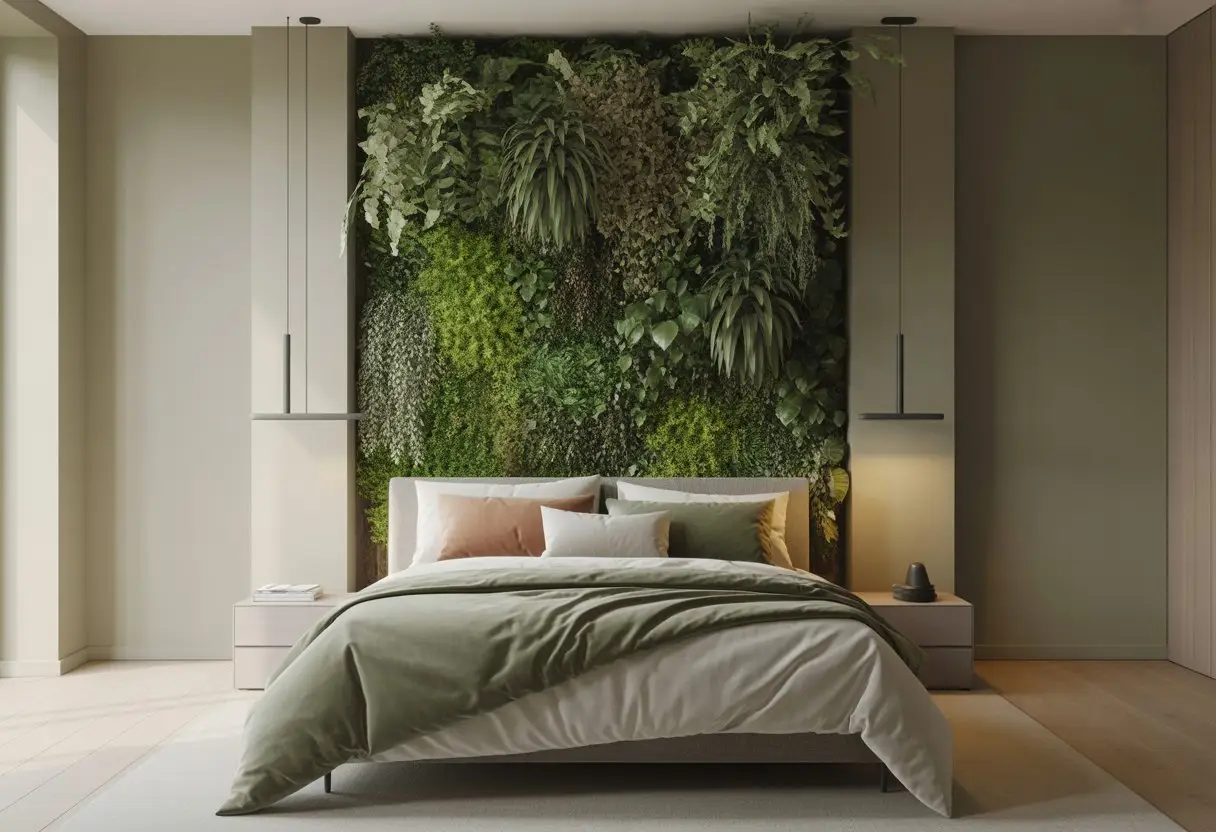
Use a muted botanical green on the walls to create a calm, nature-inspired setting. Pair it with simple black sconces or pendant lights for clean contrast without adding visual clutter.
Choose bedding in white, cream, or warm gray to balance the green. Light wood furniture and woven textures can add warmth, while a few well-placed plants reinforce the botanical theme without making the room feel crowded. For more inspiration, explore botanical green bedroom retreats.
11) Dusty green walls paired with blush accents and boucle textures
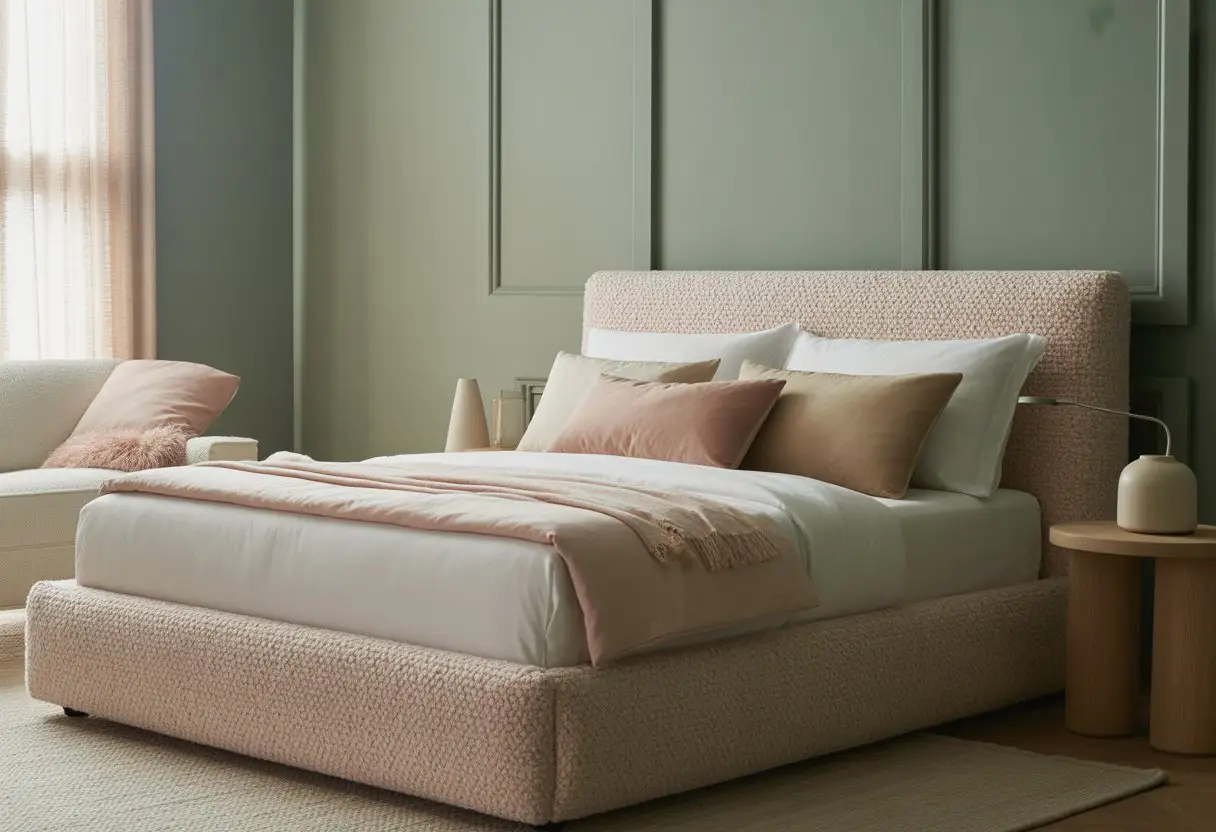
Dusty green walls give your bedroom a soft, muted backdrop. Pair them with blush bedding, curtains, or artwork to add gentle contrast without making the room feel too bright. This palette suits both modern and relaxed interiors, as shown in these green and pink bedroom ideas.
Add boucle through an upholstered headboard, bench, or accent chair. Its nubby texture balances the smooth walls and creates visual warmth. Keep wood finishes light or medium-toned, and use layered lighting to maintain a calm, comfortable feel.
12) Moody moss-green walls with warm ambient lighting
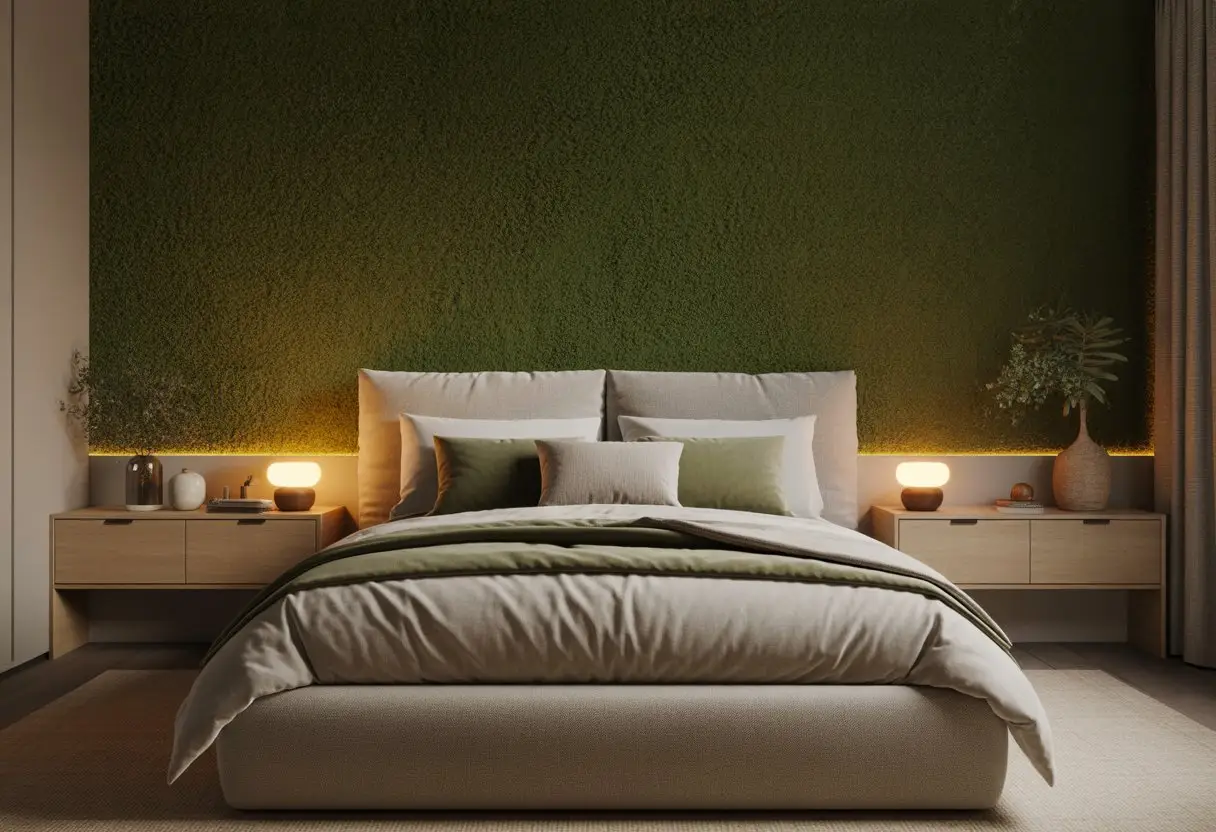
Choose moss green for a calm bedroom with added depth. The color works well behind a bed, especially when you balance it with cream bedding, light wood, and natural fabrics.
Use warm bulbs in bedside lamps, wall sconces, or hidden strip lighting to soften the darker wall color. Layered lighting lets you adjust the mood for reading, relaxing, or getting ready.
Keep decorations simple with black-and-white art, woven baskets, and muted brass accents. A soothing moss green accent wall can add interest without making the room feel crowded.
Planning a Calming Green Wall Palette
Choose a green that suits your room’s natural light, then support it with simple materials. Wood, white surfaces, and neutral textiles can keep the color balanced without making the bedroom feel busy.
Choosing Undertones for Natural Light
Check your room at different times of day before choosing paint. North-facing bedrooms often receive cooler, weaker light, so a warm green with olive, yellow, or soft beige undertones can prevent the walls from looking gray. In bright, south-facing rooms, cooler sage or eucalyptus tones can soften strong sunlight.
Test two or three samples on large boards rather than small paper swatches. View them near the window, behind the bed, and under artificial light. Green can shift noticeably as the light changes.
For a modern bedroom, muted sage works well with pale finishes, while olive creates a deeper, warmer mood. Forest green suits rooms with strong daylight or generous lamps, but it may make a small, dark room feel enclosed. Keep the ceiling and trim lighter if you want the walls to feel less intense.
Balancing Green With Wood, White, and Neutral Textiles
Use light wood with sage or eucalyptus walls to create an airy, natural palette. Oak, ash, and maple furniture add warmth without competing with the paint. For deeper olive or forest walls, medium or dark wood can create a cozy look, but add enough light bedding to maintain contrast.
White bedding gives green walls a clean, modern edge. If bright white feels too sharp, choose ivory, oatmeal, or warm beige linen. Limit the main palette to green plus two supporting colors, such as cream and natural wood, to keep the room orderly.
Add texture through linen bedding, a woven rug, or a cotton throw. Use black or aged brass in small amounts on lamps, frames, or hardware. Design guides also pair green with cream, black, pink, and wood, but repeating one accent color usually creates a more consistent result.
Caring for Bedroom Green Walls
Your wall finish affects air quality, cleaning, and long-term color. Plant walls also need careful control of light, water, humidity, and pests to stay healthy in a bedroom.
Selecting Low-VOC Paints and Durable Finishes
Choose a low- or zero-VOC interior paint to reduce fumes during and after painting. Ventilate the room well, and keep windows open when weather permits. Let the paint cure according to the label before sleeping in the room, especially if you notice a strong odor.
Pick a washable finish for areas near the bed, doors, or nightstands. Eggshell or satin paint usually handles gentle cleaning better than flat paint, while still limiting glare. Test your chosen green on a small wall section first. Natural and artificial light can change how sage, olive, or forest green appears.
Dust the wall with a soft, dry microfiber cloth. For marks, use a slightly damp cloth and mild soap. Avoid abrasive sponges, strong cleaners, and excess water, which can dull the finish or leave streaks. A bedroom with green walls can use neutral bedding and wood accents to create a balanced look.
Maintaining Living and Preserved Plant Walls
For a living plant wall, match plants to the room’s light before you install them. Check the soil or growing medium weekly, then water only when it begins to dry. Use containers with drainage, protect the wall from leaks, and empty saucers after watering. Good airflow helps reduce mold and fungal problems.
Keep leaves free of dust with a soft cloth or gentle shower of water, when the plant allows it. Remove yellow leaves, inspect stems for pests, and rotate movable plants so they receive even light. Avoid placing plants against a damp wall or directly beside a heater.
Preserved moss and dried plant walls need different care. Keep them away from direct sunlight, steam, and high humidity. Do not water preserved plants. Dust them lightly with a low-suction vacuum or a cool hair dryer held at a distance. For more layout ideas, review green wall bedroom designs with plants and paneling.
Frequently Asked Questions
Green bedroom walls work best when you match the shade to your room’s natural light, furniture, and textiles. Soft sage, muted eucalyptus, pale mint, olive, and deep forest green each create a different balance of freshness, warmth, and depth.
What is the best green wall color for a bedroom?
Soft sage is a versatile choice for most bedrooms. It works well with crisp white bedding, oak furniture, cream fabrics, and simple black accents.
Choose muted eucalyptus if you want a slightly warmer, gray-green look. For a richer design, use olive with walnut furniture and linen bedding, or apply deep forest green to one wall behind your bed.
Which green shades create the most calming bedroom atmosphere?
Soft sage, muted eucalyptus, and pale mint create a light and restful mood. Pair these shades with white, beige, light wood, and woven textures to keep the room airy.
Olive and forest green can also feel calm when you balance them with natural fabrics and warm lighting. Avoid using too many intense colors in the same room.
Are green bedroom walls still in style?
Yes. Green walls remain popular because they suit modern, farmhouse, cottage, minimalist, and traditional bedrooms. Current designs often use soft green paint with natural wood, linen, rattan, and simple furniture.
You can keep the look modern by choosing flat paint, clean lines, and limited decor. A single forest-green accent wall also adds depth without making the entire room feel dark.
How can I decorate a bedroom with sage green walls?
Use crisp white bedding to create contrast with the walls. Add oak furniture, cream curtains, and textured throws to give the room warmth without overpowering the soft green.
You can also layer beige, light gray, or muted tan textiles. Keep accessories simple, and include plants or woven baskets if you want to reinforce the natural color scheme.
What colors pair well with green bedroom walls?
Green pairs well with white, cream, beige, warm gray, black, and natural wood tones. Pale mint looks fresh with light wood and woven textures, while olive works well with walnut and warm beige.
Brass hardware can add warmth to dark green walls. For a subtle accent, use dusty pink or muted terracotta in small items such as pillows, artwork, or a rug.
Should I choose dark green or light green for a bedroom wall?
Choose light green for a small bedroom, a room with limited daylight, or a bright design with white bedding and pale wood. Sage, eucalyptus, and mint can make the walls feel lighter while adding color.
Choose dark green when you want a cozy, dramatic wall behind the bed. Forest green works best with adequate lighting, light bedding, warm wood, and a few reflective accents such as brass or glass.